Edvard Munch Art

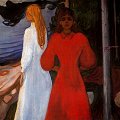 Edvard Munch (December 12, 1863, Loten, Norway - January 23,
1944, Oslo, Norway) is a Norwegian Symbolist/Expressionism painter,
whose intense, evocative treatment of psychological and
emotional themes was a major influence on the development of
Expressionism in the early 20th century. Munch is acclaimed to be the
greatest artist of Norway and a father of Expressionism.
Edvard Munch (December 12, 1863, Loten, Norway - January 23,
1944, Oslo, Norway) is a Norwegian Symbolist/Expressionism painter,
whose intense, evocative treatment of psychological and
emotional themes was a major influence on the development of
Expressionism in the early 20th century. Munch is acclaimed to be the
greatest artist of Norway and a father of Expressionism.
The purpose of Expressionism and Symbolism is to show emotions that the artist feels in hopes that the viewer will be stirred and feel them as well. The artist is not concerned with reality as it appears but with its inner nature and with the emotions aroused by the subject. To achieve these ends, the subject is frequently exaggerated, distorted, or otherwise altered in order to stress the emotional experience in its most intense and concentrated form. Munch's subject matter is symbolist in content, depicting a state of mind rather than an external reality. Munch maintained that the Impressionism idiom did not suit his art. Interested in portraying not a random slice of reality, but situations with emotional content and expressive energy, Munch carefully calculated his compositions to create a tense atmosphere.
Munch favoured a shallow pictorial space, a minimal backdrop for his frontal figures. Since poses were chosen to produce the most convincing images of states of mind and psychological conditions, the figures impart a monumental, static quality. Munch's figures appear to play roles on a theatre stage, whose pantomime of fixed postures signify various emotions; since each character embodies a single psychological dimension, as in The Scream, Munch's men and women appear more symbolic than realistic.
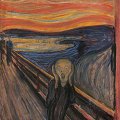
The Scream (1893, originally called Despair), Munch's best-known painting, is one of the pieces in a series titled The Frieze of Life, in which Munch explored the themes of life, love, fear, death and melancholy. As with many of his works, he painted several versions of it. The Scream, his most famous work, is often seen as a symbol of modern humanity's spiritual despair.
Munch's pictures show his social awareness and his tendency to express many of the basic fears and anxieties of mankind. Edvard Munch places his feelings and emotions deep inside in his paintings. Munch's art works penetrate beyond external appearances to the inner conditions of the subjects he painted. He is a very talented artist, although, his life was more painful than you may think.
Munch spent the last decades of his life at Skoyen, Oslo, Norway. He died there on January 23, 1944, about a month after his 80th birthday. He left 1,000 paintings, 15,400 prints, 4,500 drawings and watercolors, and six sculptures to the city of Oslo, which built the Munch Museum at Toyen. The museum houses the broadest collection of his works. His works are also represented in major museums and galleries in Norway and around the world. "From my rotting body, flowers shall grow and I am in them and that is eternity."
Munch's art is now considered a significant force in modern art. His art is simple, direct, and vigorous in style, yet powerful in essence and in subject matter.
Google celebrated Munch's birthday in 2006 by changing the logo on the main page to a tribute to his well-known painting The Scream.
The most notable pictures by
Edvard Munch
have been carefully collected, selected and researched, and they are
now available to you in one, easy to use, combined package, i.e. art pack.
The pictures are designed to work as a desktop background
(a wallpaper) on any computer with Microsoft® Windows® 10, 7, 8, Vista
and XP. The 22
MB art pack includes 75
museum-quality
wallpaper art images for your desktop.
Roll up the list
 See the complete list.
Get this high-quality product now to excite, inspire, and educate yourself!
See the complete list.
Get this high-quality product now to excite, inspire, and educate yourself!
Contents
- From Maridalen, 1881
- Self-Portrait, 1883
- Morning, 1884
- The Painter Jensen-Hjell, 1885
- The Sick Child, 1886
- Jurisprudence, 1887
- Laura, 1888
- Military Band on Karl Johan Street, 1889
- Portrait of Hans Jaeger, 1889
- Spring, 1889
- Summer Night (Inger on Shore), 1889
- Night in Saint Cloud, 1890
- Spring Day on Karl Johann, 1890
- Moonlight over Oslo Fjord, 1891
- Rue de Rivoli, 1891
- Evening on Karl Johan, 1892
- Melancholy, 1892
- Sister Inger, 1892
- Landscape, 1893
- Starry Night, 1893
- Summer Night's Dream (The Voice), 1893
- The Girl by the Window, 1893
- The Scream, 1893
- The Storm, 1893
- Anxiety, 1894
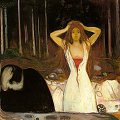
- Ashes, 1894
- Despair, 1894
- Red and White, 1894
- The Vampire, 1894
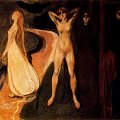
- Woman in Three Stages, 1894
- By the Deathbed, 1895
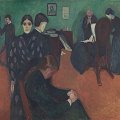
- Death in the Sickroom, 1895
- Jealousy, 1895
- Madonna, 1895
- Melancholy, 1895
- Puberty, 1895
- Self-Portrait with Burning Cigarette, 1895
- The Day After, 1895
- The Voice, 1895
- Melancholy, 1896
- Nude, 1896
- Paris Nude, 1896
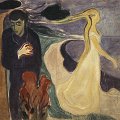
- Separation, 1896
- Young Girl on the Shore, 1896
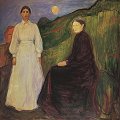
- Mother and Daughter, 1897
- The Kiss, 1897
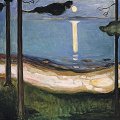
- Moon, 1898
- The Kiss, 1898
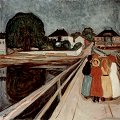
- Girls on a Bridge, 1900
- Golgotha, 1900
- The Dance of Life, 1900
- Winter Night, 1900
- Girls, 1901
- Girls on the Jetty, 1901
- The Beast, 1901
- Street in Asgardstrand, 1902
- The Dance on the Shore, 1902
- Girls on the Jetty, 1903
- The Four Sons of Dr. Max Linde, 1903
- Generations, 1904
- Self Portrait (Against Two-Colored Background), 1904
- Self-Portrait with a Wine Bottle, 1906
- Couple on the Shore (From the Reinhardt Frieze), 1907
- Crying Girl, 1907
- Death of Marat II, 1907
- Two Girls (From the Reinhardt Frieze), 1907
- Self Portrait in Copenhagen, 1909
- The Scream, 1910
- Winter Kragero, 1912
- Self Portrait, 1919
- Self Portrait (In Distress), 1919
- Meeting, 1921
- Nude by the Wicker Chair, 1929
- Self Portrait, 1940
- Self Portrait, Between Clock and Bed, 1942
Availability and pricing
$19 (75 items)
Previews
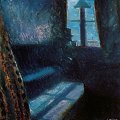
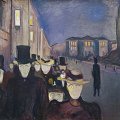
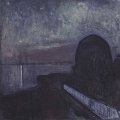
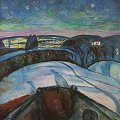
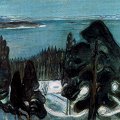
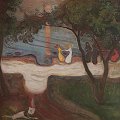
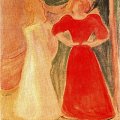
23 smaller images are available for preview:
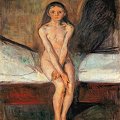
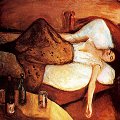
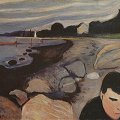
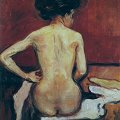
Availability and pricing
$19 (75 items)
More
Articles
Art Encyclopedia A world history of art in articles.
Modernism
Edvard Munch
Art, life, and world of symbolic expression.
Art, paintings, and works.
The Scream.
Art
Art Wallpapers Art image collections for your desktop.
Munch Art, $19
(75 pictures)
Malevich Art, $25
(105 pictures)
Modigliani Art, $29
(135 pictures)
Klee Art, $25
(150 pictures)
Miro Art, $35
(150 pictures)
Matisse Art, $29
(180 pictures)
Picasso Art, $29
(175 pictures)
Dali Art, $35
(275 pictures)
Chagall Art, $35
(175 pictures)
